
Saving Face
It only hurts when I laugh

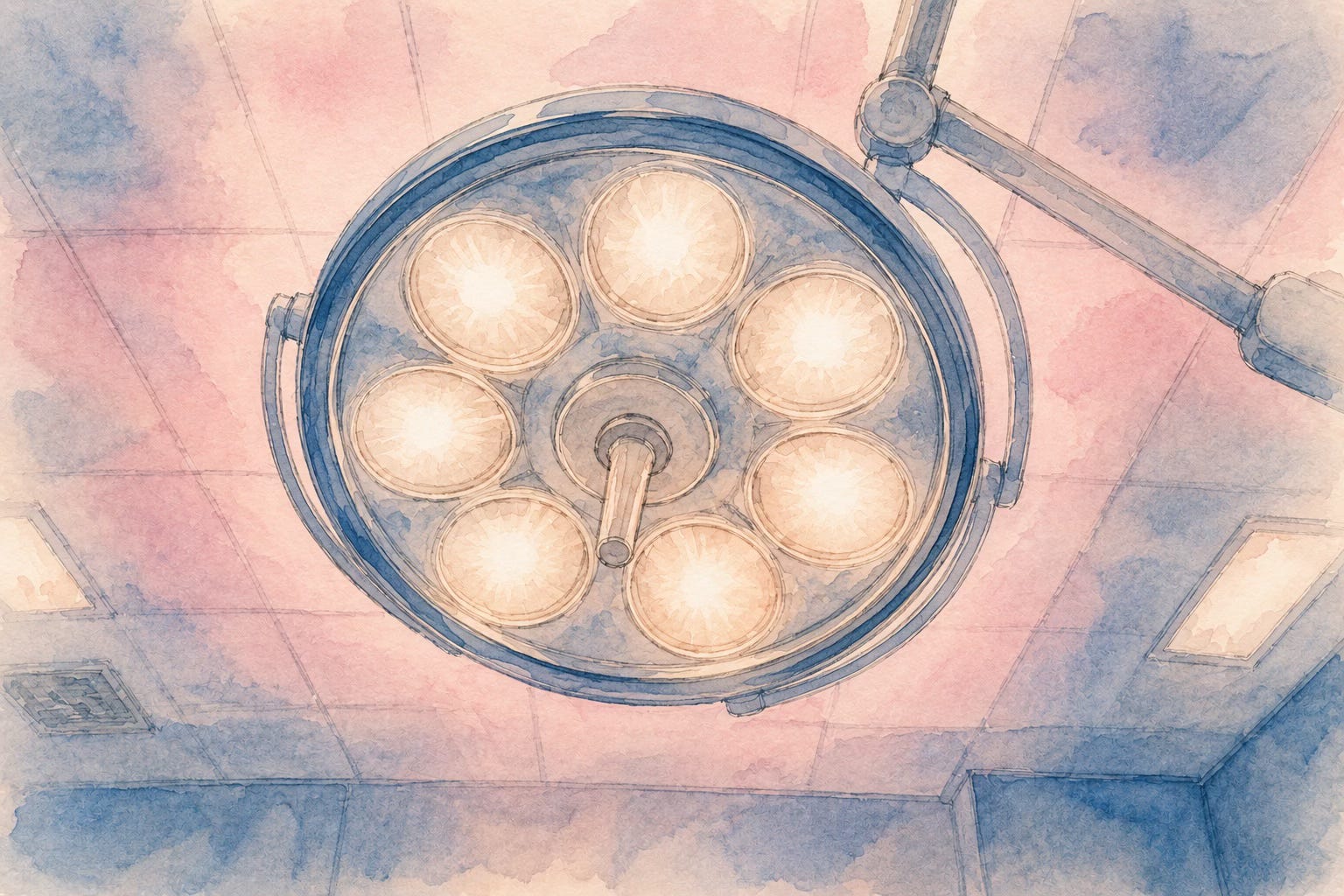
The shiny six-inch needle flashed, catching the reflection of harsh overhead lights. Once again, I found myself lying face up on a cold operating room table.
Seventh surgery.
Several weeks earlier, I visited the plastic surgeon.
Escorted from the luxurious reception room, I perched on a leather exam table, legs dangling like a toddler’s.
Seven scars engraved my cheeks. My lower eyelid drooped. Melanoma’s revenge.
A wall-mounted TV screen scrolled before-and-after patient photos. Images of irregular noses, turkey necks, and bald heads flipped silently every five seconds. No one had scars. At least visible ones.
Dr. Q entered briskly. Dressed in black scrubs, he sported a 1000-watt smile and designer cut hair. He was accompanied by a young female assistant.
“Dr. Lenz, how are you doing?” he asked.
“Hanging in there,” I replied. I turned to the assistant and said, “Dr. Q saved my life.”
Her eyebrows lifted.
I continued. “As soon as he saw the pigmented area on my face, he told me it needed to be biopsied. My dermatologist missed it for two years.”
Dr. Q’s face reddened as he scooted his stool closer.
His deft, manicured hands kneaded my cheek. “This skin graft is socked in with scar tissue,” he said. “It’s contracting and pulling your eyelid down.”
I asked, “What do you recommend?”
“I think you need a fat transfer to give it volume and CO2 laser to soften the scar.”
“I don’t have any expertise in this area,” I said. “If you think that’s what’s necessary, okay. Does Medicare cover this?”
“No,” he said. “They consider this to be cosmetic and not functional.”
“How much will this cost?” I asked.
“Talk to my finance director,” he replied, pushing his stool back. “But if you want a cheaper procedure, I can do this under local instead of putting you to sleep.”
I chewed on my bottom lip but didn’t answer.
On the day of the procedure, I popped the prescribed Valium into my mouth before we left home. My husband and I arrived at Dr. Q’s outpatient surgery center. In stark contrast to the main office, this waiting area, the size of a large walk-in closet, barely accommodated six worn gray chairs.
I rang the wall-mounted bell. A nursing assistant answered.
“Welcome, Dr. Lenz,” he said.
I kissed my husband goodbye and followed the assistant to the exam room.
Before I sat down, a young woman entered and asked for my credit card to complete payment.
Surprised, I said, “Back in the day, we used to call that a positive pocketbook biopsy.” The woman looked up with knit brows and handed me the receipt.
A knock on the door ushered in the nurse, Sara. Smiling, she escorted me to the operating room. Climbing on the table, I lay down and was immediately blinded by the overhead lamp.
Dr. Q walked in and put a hand on my shoulder. “Are you ready?”
His calm voice quieted the drumming in my chest.
After some brief instructions, he started injecting lidocaine into my face and both outer thighs. A tear rolled down my cheek, spilling into my ear.
Sara patted my boob. Expecting to tap my shoulder, she missed.
“Sara, um, that’s my boob,” I said. “If it’s supposed to distract me, it’s working,” I joked.
“I’m so sorry,” she said, immediately withdrawing her hand and placing it on my shoulder.
Dr. Q shook his head and moved to my side. He selected an oversized syringe from the shiny metal side tray. My stomach tightened.
“That’s huge,” I said.
“It extracts the fat,” Dr. Q said matter-of-factly as he roto-rooted my thigh.
“Well, you won’t find any shortage of that,” I said wryly.
He lifted the syringe. Thick gel resembling chicken fat sloshed inside. A sour taste settled at the back of my throat.
Dr. Q moved to work on the cheek adhesions.
The CO2 laser fired up. A high-pitched whine followed by a hiss accompanied each zap. I mentally checked to make sure I wasn’t the one producing those sounds.
“Dr. Q?” I asked, gripping the side of the table. “I’m not sure the Valium is working. Do many people do this surgery under local?”
“No, hardly anyone does,” he replied. “But it saves the cost of intravenous anesthesia and a nurse anesthetist.”
“Did you give me the option of propofol?” I asked.
“No, not specifically,” he said. “I figured as a physician that you knew the difference between local anesthesia and sedation.”
I knew.
“Hmm,” I said, my face stinging. I wondered if the Valium was a placebo. “This smarts.” I waited a beat, then added, “But not as bad as an endocervical curettage.”
“I can’t relate to that,” Dr. Q laughed.
“Think prostate biospy,” I responded. The nurses gasped.
Dr. Q paused. “Sara, in the future, remind me that any doctor having this procedure must be sedated. No exceptions.”
A short time later Sara recited my discharge instructions. She said, “Dr. Lenz, you were a doll. I wish more patients were like you.”
I smiled wanly, dressed, and found my husband. “How did it go?” he asked.
“It was all right,” I replied. He squeezed my hand.
On the drive home, I pulled down the sun visor and looked at my swollen, red face in the mirror. Purplish bruises were forming below my eye, further defining my sagging lid.
My thoughts darkened. Seven surgeries. At least one more to go.
I snapped the shade back in place.
Unblocked, the afternoon sun streamed through the windshield.
Inhaling the warmth, my shoulders softened. My head floated.
The Valium finally kicked in.
Melanoma is highly curable when caught early. It takes ten minutes a month to check — here's how.
This was written so well that I felt every moment of your experience like I was right there! I'm so sorry you had to go through that intense and scary procedure (and so many others). My hope is that writing about it and sharing it makes it somehow lighter to carry. I'm so very thankful to Dr. Q for saving your life!! ❤️
Thank you for reading and commenting, Kirsten! I hope others can relate, get a chuckle, or check their skin! Our healthcare system is broken, as you know. It seems everyone is on their own to seek out wellness. Appreciate you, my friend! 🩵